About Me
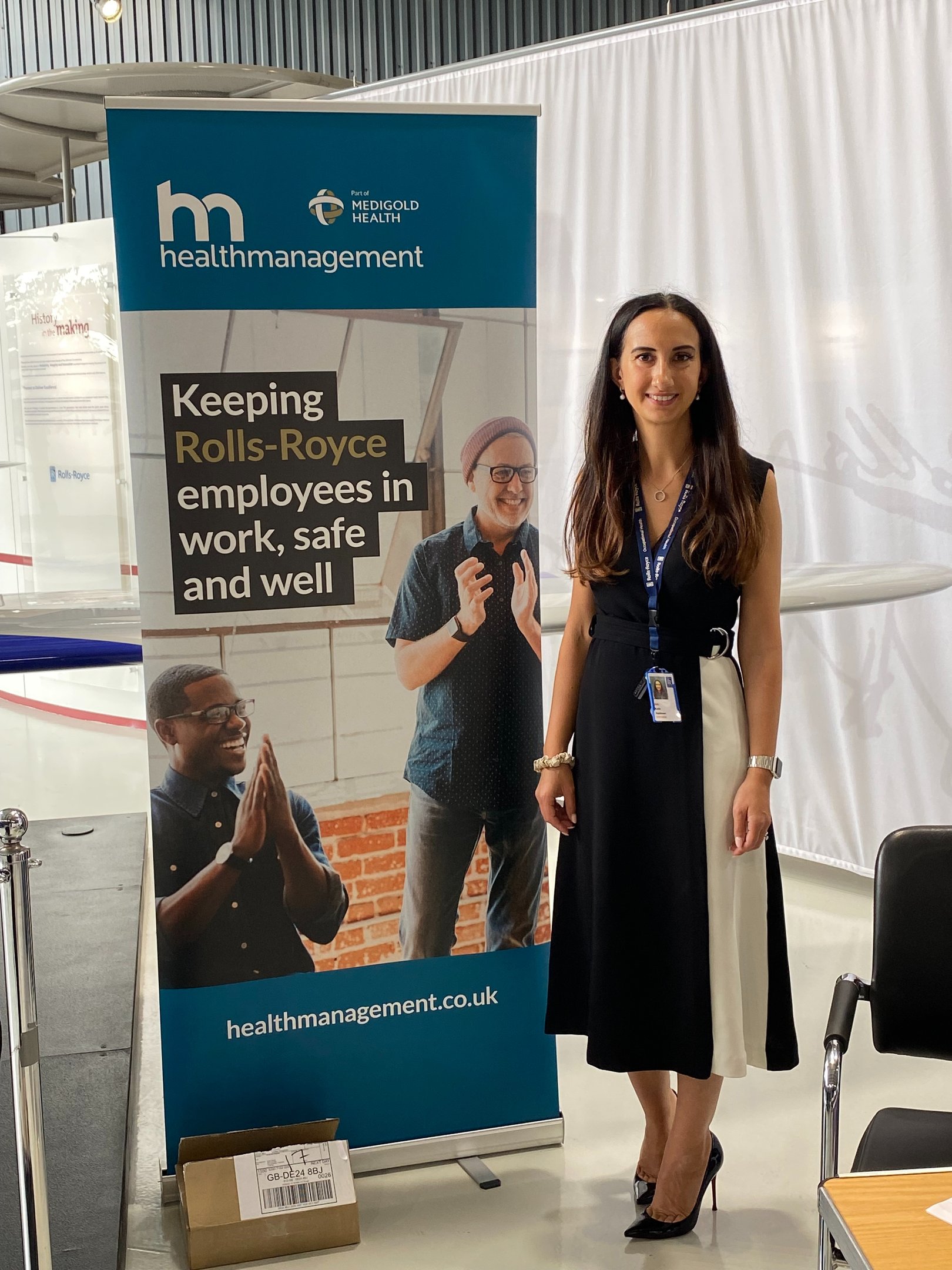
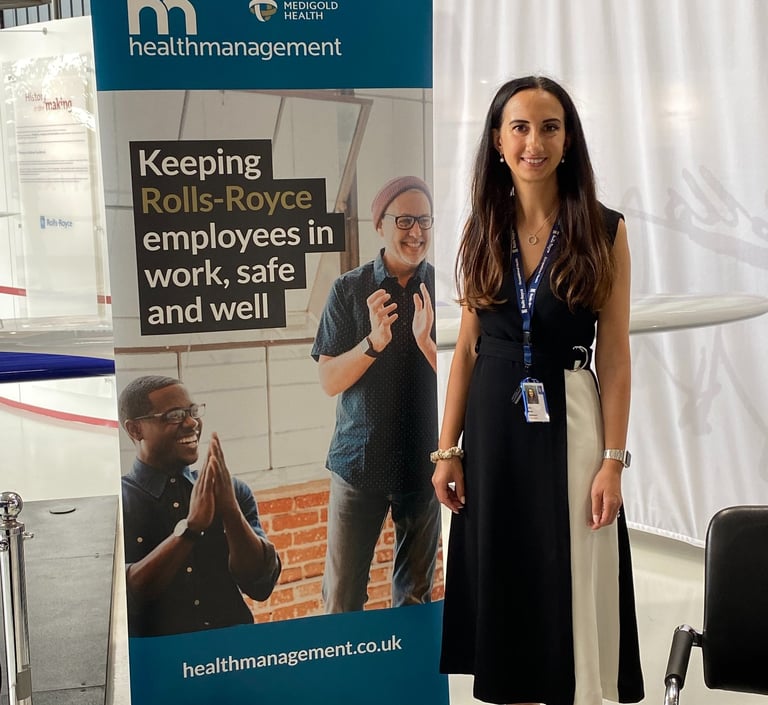
I’m Katie, founder of The Health and Wellbeing Nurse.
Outside of my work, I’m also a parent, balancing family life alongside a career and understanding first-hand how easily work and life demands can begin to overlap.
If you’d like to understand more about my professional background and experience, you can find this below.
And if you’re interested in how The Health and Wellbeing Nurse was created, and why - you can skip further down with the button below.
About Me
Professional Background
I am a registered nurse with over 10 years’ experience working within occupational health.
Throughout this time, I have supported the development and implementation of return-to-work plans for many thousands of employees, from shop floor roles through to senior leadership and C-suite positions.
My work has involved operating within complex, high-demand environments, including alongside two of the most well-known manufacturing organisations globally.
This has provided a clear understanding of how workplace pressures, expectations, and systems impact an individual’s ability to return and sustain work following burnout.
This combined understanding of both the physiological impact of burnout and the realities of workplace demands allows me to bridge the gap between managing a health condition and navigating a return to work in a practical, structured way.
Approach
My approach is informed by:
Occupational health principles
Real workplace environment and experience
Structured, practical guidance
Alongside direct experience supporting individuals navigating burnout and return-to-work challenges.
In practice, I often see individuals returning to work without a clear plan, relying on willpower alone to manage demands that have not changed.
It is also common to see capability not yet fully aligned with the expectations of the role at the point of return.
The focus of my work is to provide a more structured approach, one that supports not just the return itself, but the ability to remain well once back at work.
Lived Experience
Alongside my professional experience, I experienced burnout myself in 2021, post-COVID.
Looking back, I could feel it developing over time. There were clear signs for months that something wasn’t right but, I wasn’t willing to fully accept what was happening.
There was a level of naivety in that.
I was the nurse. My role was to support others. It was difficult to recognise that my own capacity had been exceeded.
It took a second perspective to bring clarity.
I had contacted my GP for an unrelated issue, and by the end of a brief appointment, I had been signed off with burnout. It wasn’t something I had fully acknowledged myself but, when viewed as a whole, it was clear.
Acceptance was one of the more challenging parts.
Recovery
From that point, I approached my recovery in the same way I would support someone in a clinical setting.
I completed my own assessment framework and structured a recovery plan based on what I knew to be effective.
And, objectively, if someone had presented to me with the same assessment, I would have advised exactly the same. That they were not fit to work at that time and required a period of time off for recovery.
Following that plan, however, was not straightforward.
As simple as it sounds in principle, applying it to yourself, particularly, when you are used to maintaining a high level of output is so difficult.
But structure is what allowed recovery to take place.
Returning To Work
The next stage was returning to work.
This was, in many ways, the more complex part.
Returning to the same environment raised important questions:
What had actually changed?
Would the same patterns repeat?
Would this lead back to the same outcome?
There was uncertainty around whether returning was the right decision at all.
Even within an occupational health setting, the guidance available was limited.
Beyond a brief suggestion of a phased return, there was little structure in place to support to change the way I worked.
This lack of clarity is something I now recognise as a significant factor in why returning to work can feel so challenging.
Creating A Different Approach
To move forward, I applied the same structured approach to my return to work.
I drew on my clinical understanding, alongside what I had seen work, and not work, in practice over many years.
It became clear that returning successfully required more than simply going back.
It required:
Clear structure
Defined boundaries
Adjustments to how work was approached
This was not about changing the workplace entirely, but about changing how I worked within it, in a way that allowed work to feel sustainable, purposeful, and manageable.
What This Means
This experience has provided a deeper understanding of the realities of burnout, recovery, and returning to work.
Not just in theory but in practice too.
It reinforced the gap that exists between:
Medical sign-off
Workplace expectations
Practical, day-to-day implementation
Why This Matters
This is now the focus of The Health and Wellbeing Nurse.
To bridge the gap between:
NHS fit notes and talking therapy services
Workplace expectations and demands
And to provide a structured, practical approach that shows you how to navigate your return to work in a way that works for you.
Not just to return, a new way of working which is sustainable.
About
The Health
& Wellbeing
Nurse
About The Health & Wellbeing Nurse
Returning to work after burnout is rarely as straightforward as it’s made out to be.
In many cases, individuals are given time away, medically fit to return, and then expected to resume without a clear structure to support that transition.
These concerns are not a sign that you’re not ready.
They are often an indication that something in the return to work process hasn’t been fully addressed.
In clinical practice, this is something I see frequently. Individuals being 'fit to return', but without a clear structure to support that transition back into the workplace.
This is where my work is focused.
Why I Created The Health & Wellbeing Nurse
In larger organisations, occupational health services are often available.
However, in practice, these services are typically time-limited — with short appointments and standardised reports that are often designed to support the organisation and manager in facilitating a return.
While this can be helpful, it can mean that the individual is left with limited time to fully explore their situation or build a practical, personalised plan.
In smaller organisations, access to occupational health support is often not available at all.
At the same time, GPs play an important role in assessing fitness for work and issuing fit notes.
They may also suggest access to talking therapies or local support services.
However, due to time constraints and the nature of their role, there is often limited opportunity to explore the specific demands, expectations, and pressures of an individual’s workplace in detail.
Managers, on the other hand, are responsible for supporting a return to work, but may not always have a clear understanding of burnout, or how best to manage a safe and sustainable transition.
What this often creates is a gap between:
Clinical understanding of burnout
The practical realities of the workplace
This is where many of the difficulties arise.
Bridging The Gap
The Health and Wellbeing Nurse was created to provide an independent, structured layer of support within this gap.
This is not a medical service, and it does not replace occupational health or GP care.
Instead, it provides health and wellbeing support focused on helping individuals:
Understand their recovery
Navigate workplace expectations
Build a structured and sustainable return-to-work approach
It offers a practical way to bridge the space between:
Medical guidance
Workplace demands
Using both clinical understanding and real-world experience of how work environments operate.
What Does This Mean
You don’t need to return to work in the same way you did before.
I’ve been in your position. I understand how different it can feel in reality compared to what is expected on paper.
This is not about being told to “think positively” or to push through with generic wellbeing advice. It’s about having a structured, realistic approach that reflects how recovery and work actually interact.
With the right structure in place, it is possible to work in a way that feels more sustainable, with clearer boundaries, more stable energy, and a greater sense of control over your day-to-day work.
The aim is for you to feel more in charge again, with the reassurance that there is a steady, considered approach supporting you.